
AI in education research
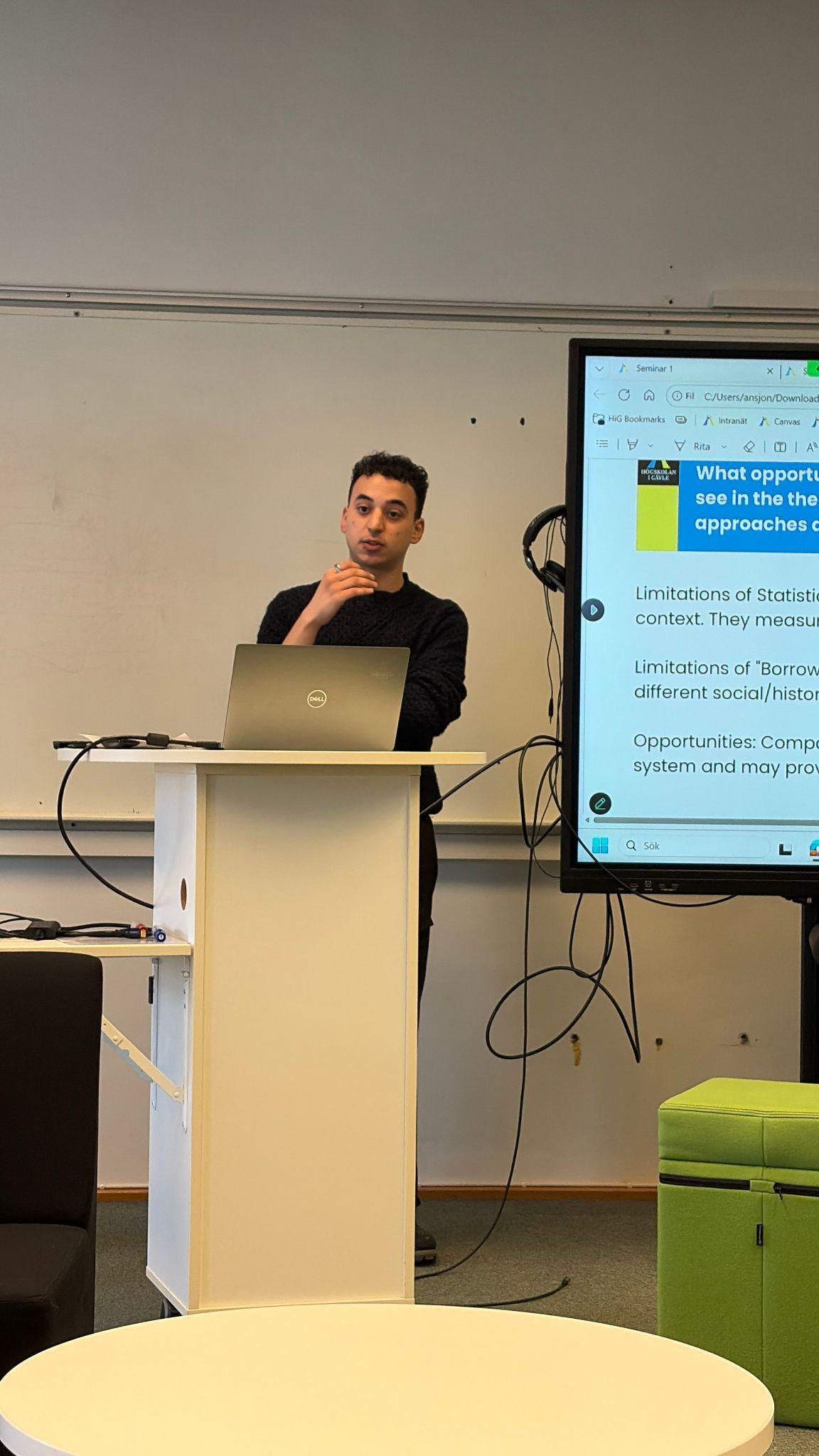
My master's research asks whether AI in education strengthens cognitive development and Bildung*. It is a qualitative framework analysis, with in-person interviews in 2026 with senior leaders from EdTech companies, school groups and government bodies in Dubai and Abu Dhabi.
Bildung is the lifelong process of maturing into an autonomous, empathetic, and responsible human being, rather than simply memorising facts or training for a job.
It is part of my three master's degrees in education, from Sweden, Germany and Italy, on an Erasmus Mundus scholarship. I work across Europe and the UAE.
My dissertation
My dissertation is "Framework Analysis of Cognitive Development and Bildung* in AI Education under We the UAE 2031 and the UAE National Strategy for Artificial Intelligence 2031". I lived in the UAE for a month for this research. I do not name the people or the organisations I interviewed.
Key finding
The bottleneck in AI EdTech is not the technology. It is implementation and the trust of teachers and parents. Resistance pathways for cognition must be designed in from day one, with safeguards, because without them AI does students more harm than good.
In other words, what holds AI back in schools is not the model. It is whether teachers and parents trust it, and whether schools can put it into practice. That is why I argue for resistance pathways for cognition, where the learner thinks before the AI helps, built in from day one together with safeguards.
The UAE context
- We the UAE 2031 and the UAE National Strategy for Artificial Intelligence 2031 set the national direction.
- The Ministry of Education teaches AI in public schools from kindergarten to Grade 12, from the 2025 to 2026 school year, in seven areas: foundational concepts, data and algorithms, software use, ethical awareness, real-world applications, innovation and project design, and policies and community engagement.
- In Abu Dhabi, ADEK's AI Literacy initiative, announced in September 2026, covers more than 170 private schools and aims to train 19,000 educators. It includes the AI Growth Test, a Technology and AI Policy and an AI lead in each school.
- In Dubai, the KHDA expects to issue AI guidelines for schools in 2027. The KHDA, the DP World Foundation and MIT RAISE also run an AI literacy programme for Grades 6 to 8.
- Dubai's Education 33 (E33) strategy puts personalised learning journeys, critical thinking and future skills at its centre.
Sources
- We the UAE 2031 vision (u.ae) (external link)
- WAM, Ministry of Education introduces AI curriculum in public schools from 2025-2026 (external link)
- Abu Dhabi Media Office, ADEK advances AI Literacy initiative across 170+ private schools (external link)
- The National, Dubai schools to receive new rules on AI use for children next year (external link)
- Dubai Media Office, DP World Foundation, KHDA and MIT RAISE AI literacy programme (external link)
- Dubai Media Office, Education 33 strategy (external link)
The European context
The EU AI Act treats AI that evaluates learning outcomes, or steers a learner's path, as high-risk. The AILit Framework, from the European Commission and the OECD, gives schools a shared reference for AI literacy. UNICEF's Guidance on AI and Children 3.0 sets out what AI must do to uphold children's rights.
My studies put different traditions side by side: participatory design and flat classroom hierarchies in Sweden, the German idea of Bildung*, and intercultural pedagogy in Italy.
Methods
Qualitative research, with expert interviews and framework analysis.
Last updated: