
Stories from Home
Stories from Home is an app for children of expats, of any nationality, to learn their home dialect through stories of home. Each story is adapted to the child's age and reading level, and every chapter ends with a question for a parent.
The first nationality pack is the Egyptian one, حكايات من مصر. It tells the life of Naguib Mahfouz in Egyptian Arabic, and it has been in pilot testing with Egyptian families in Europe, starting in Sweden, since September 2026. I designed the app and built it with AI-assisted development (Claude Code).
Screenshots
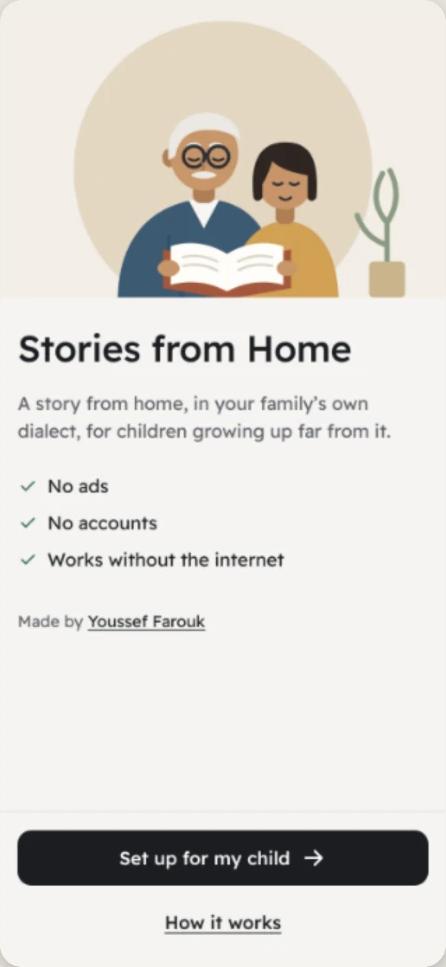
The welcome screen is the same for every family, before they choose a country. 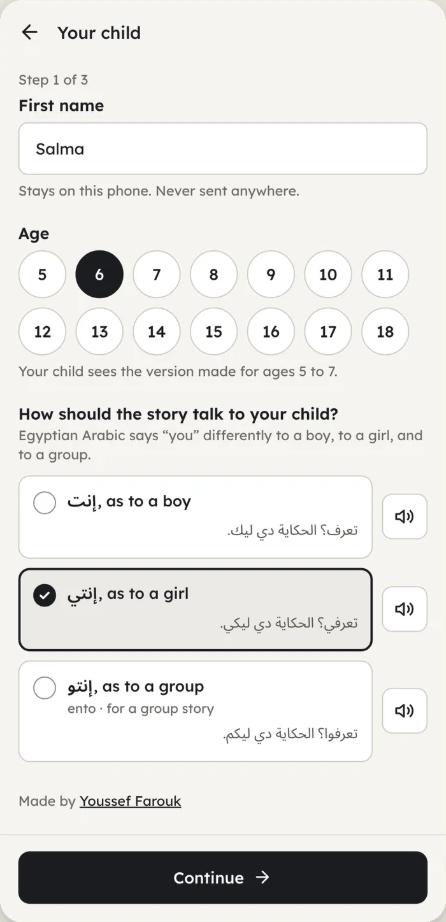
The name stays on the phone. Arabic "you" changes for a boy, girl or group. 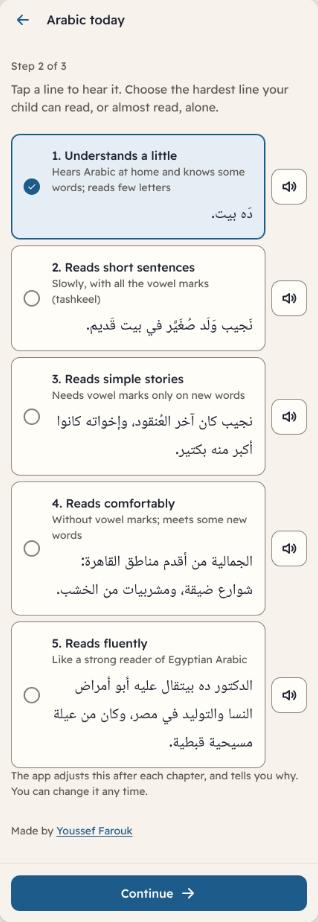
Parents pick the hardest line their child can read, and the app adjusts. 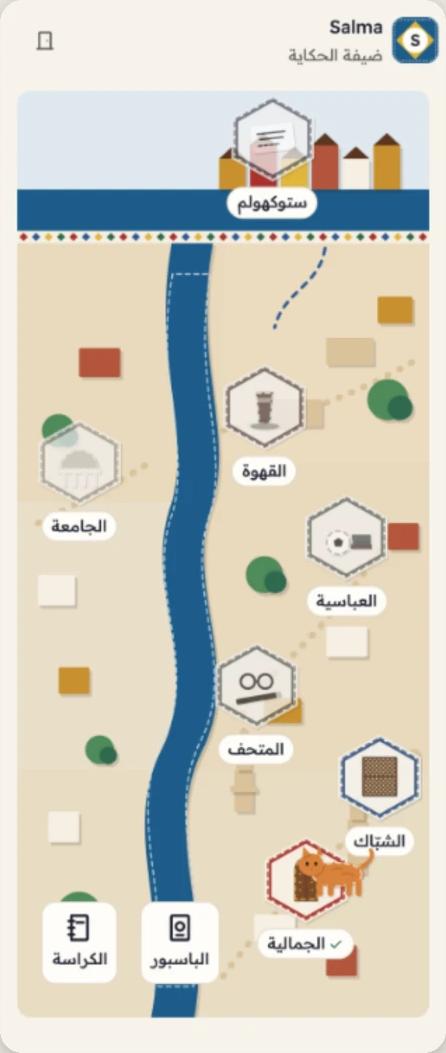
Progress is a story map with passport stamps, with no points. 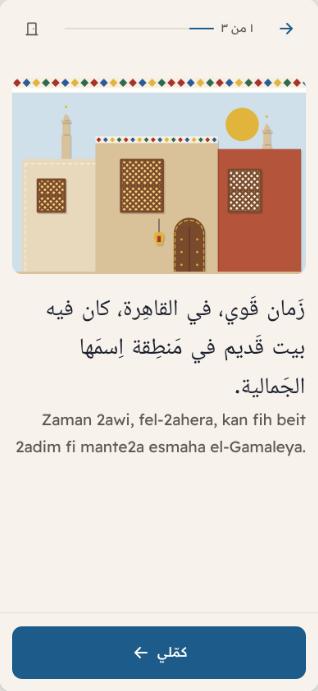
A six-year-old reads one short line, with vowel marks and a transliteration. 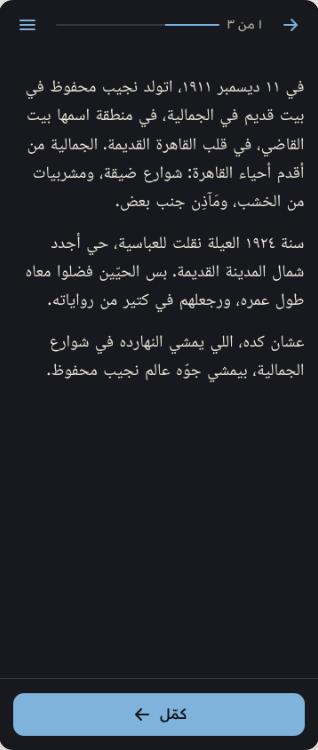
A sixteen-year-old reads the same scene in full paragraphs. 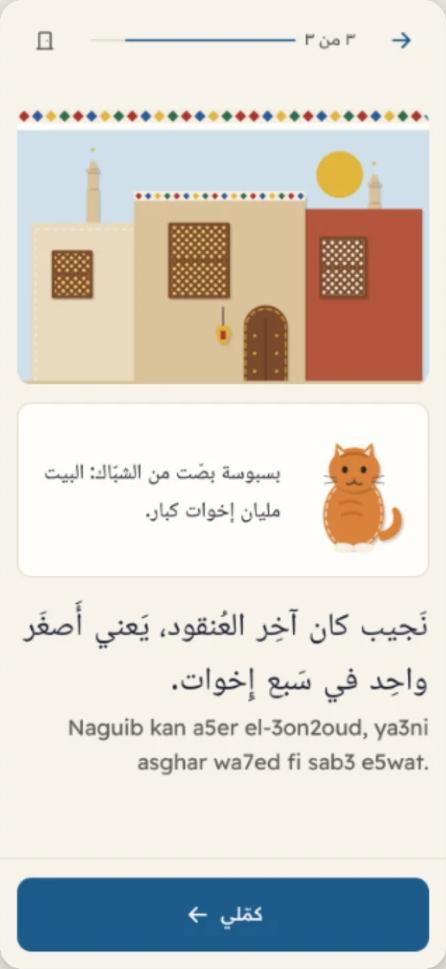
Basbousa the cat looks in through the window and adds her own line. 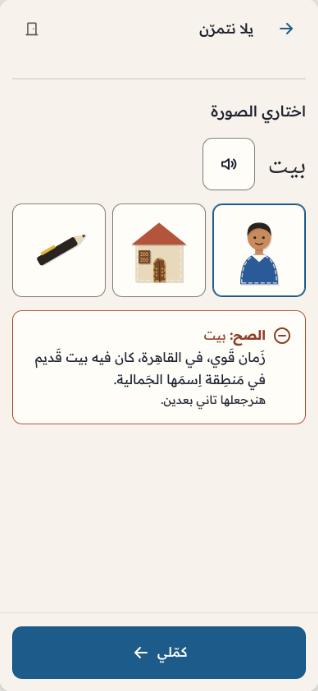
Practice uses pictures, words and sentences from the story. 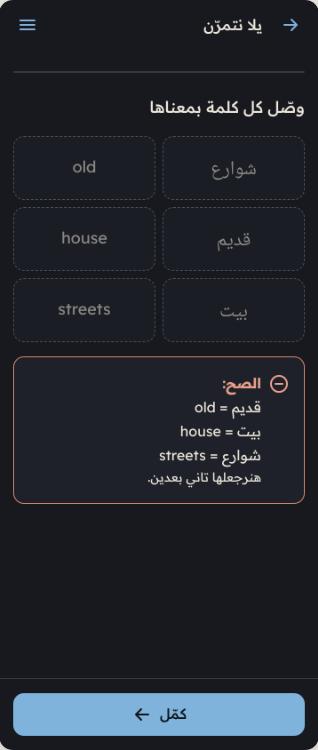
A wrong answer shows the right one, and the word comes back later.
One app for every nationality
The app itself is for every country and nationality. Each country comes as a nationality pack, with its own language or dialect and its own stories, and the welcome screen stays the same for every family until they choose their country. The Egyptian pack, حكايات من مصر, is the first one, and it is in pilot testing.
Child-centred AI design
The design idea is "The Tent", after Cairo's khayamiya tent work: quiet outside, rich inside. Four rooms, one for each age group, run on one story engine, so the same story grows with the child.
Arabic right-to-left UX in the Egyptian pack
The Egyptian pack is in Arabic, which reads right to left. Egyptian Arabic says "you" differently to a boy, a girl and a group, so the app asks who is reading. Each line also comes in Latin letters, for children who do not read Arabic script yet, and Arabic typography research shaped the reading view.
Cognition-safe design decisions
- Progress is a story map with passport stamps, not points, and there are no loss mechanics.
- There are no scoreboards and no chats.
- The child's level sets how simple the language is, so the story stays within reach without doing the thinking for the child.
- Every chapter ends with a question for a parent, so the child thinks the story through out loud.
- A wrong answer in practice shows the right one, and the word comes back later, with nothing lost.
Building parent trust
Parents come first. AI-written text is labelled, sources are explained in plain language, and screen-time defaults follow Swedish public-health guidance. This is my research finding in practice: parent trust is designed in, not assumed.
AI guardrails
- AI rewrites each chapter live, but only from a fact-checked fact sheet.
- Its output is checked, and the app falls back to hand-written text.
- Sensitive history is gated by age.
- The child's name never reaches the AI.
- Parents can turn AI off, and the app then uses ready-made chapters.
Designing with families in Europe
The design draws on Scandinavian participatory design and Cooperative Inquiry, and co-design with Egyptian families in Sweden is planned. Other influences are Montessori, Reggio Emilia, self-determination theory, the Nielsen Norman Group's research on UX for children and teens, and Arabic typography research.
Last updated: